

Mild Spoilers Ahead
I made it known on my personal Facebook that, while the series had really great moments, I was overall disappointed for a number of reasons. Now, before I begin I will note that I have been following Dear White People since the creators started crowdfunding for the film prior to its inception in 2014. The movie, while not perfect, was thoughtful and refreshing and needed for the rising discussions. I have an appreciation for films that do not illustrate perfection because they seem more realistic. For the series now adapted to Netflix, the concept of Dear White People seemed to morph into something that wasn’t true to the initial film.
Again, there were some hit and misses for me and how they correlate to real life. At some point or another, I may address them in another post in a formal review. However, given the political climate, one of my pet peeves regarding the series was its climax.
At the climax of the series Sam, our “woke” protagonist, leads a protest outside the University’s town hall for the campus’s neglect to protect students of color from campus police. Her protest is then met with two other protests: one that is maximizing the opportunity to push their own agenda around drunk driving fatalities, and the other is an #AllLivesMatter rally (essentially) mocking their efforts.

Sam is soon confronted by Connor, who is the main architect of the #AllLivesMatter protest in order to antagonize students who believe campus police shouldn’t pull guns on students. Connor asks Sam, “Has anything you’ve done, actually made things better?” and then placates that they “could have been allies, but you (Sam) were trippin.” The camera pans to Sam, for her moment of redemption from episodes of her whackness.
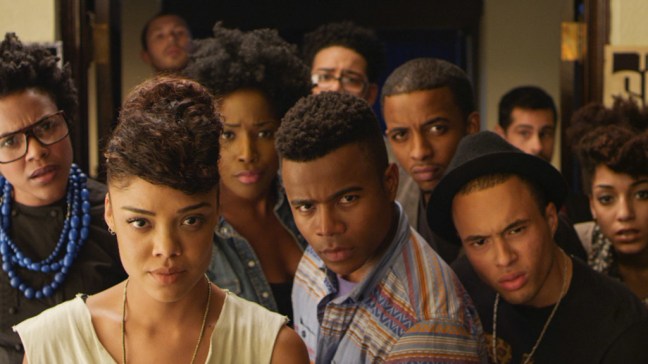
Sam ends the conversation with silence.
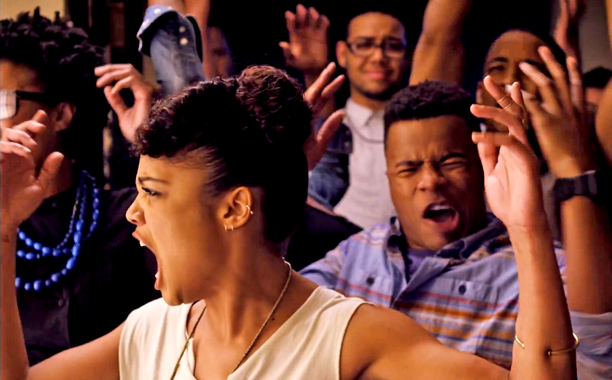
Perhaps it is due to her distraction with Gabe making his problematic presence known, but the moment fell flat. It was an awkward moment. Connor’s actions are nothing more than a way to invalidate their experiences further than just his counter protests. Connor is essentially asking, what is the purpose of protesting? He assumes the answer is nothing.
How can Sam, a woman who is presented as someone who is culturally and socially aware (throwing out names like Assata Shakur to validate her “wokeness”), but fails to articulate why protests matter?
Dear White People (both film and series) is a satire of a larger conversation surrounding the complexities of oppression and the roles we assume. While it can be argued that this is a part of the satire mold, it is not always the case. In other satires, there is a character that is usually presented to drop some truths and Sam was set up to be that character, in both the film and series. This is why this scene was one of the most disheartening and completed the arc of Sam’s whackness.

With the verdict following from the Philando Castile verdict, the conservation arises again throughout social media.
“What is the point of protesting?”
“Why do you have to do it this way?”
Now when we are living in a society where another injustice calls people to protest in the streets and draws all types of criticism; there is clearly an issue in how we understand the political process and the important role protests have in creating change.
Do protests singlehandedly solve all of our social woes? No, protests were not designed to do so. They are a part of a larger structure is not as organized as textbooks may elude. It is during these times people love to mention the Civil Rights Movement; a time when activists “did it right.”
This line of thinking really simplifies the events that took place during that time. First, can we stop believing that the Civil Rights Movement began in the 1950s? Most marginalized people in the United States began their quests for civil rights prior to this time. Black people began organizing on the plantation and continued to do so after all enslaved people were emancipated. This is where we saw historically Black institutions rise; they challenged the law in cases like Plessey v. Ferguson (1896). Women began organizing for their rights as well (often using Black women and excluding them in the end), prior to Susan B. Anthony’s actions.
Next, let’s stop assuming that other meetings are not happening WHILE people protest. It really grinds my gears when people assume that all people of any movement do is protest in the streets. While prominent figures of the Civil Rights Movement were meeting with political officials in offices, people continued to march in the streets.
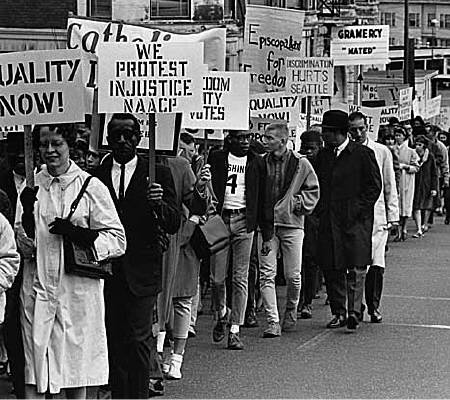
The Montgomery Bus Boycott is one of the most cited demonstrations that utilized many tactics, such as an economic bus boycott, legal prosecution, and protesting. The Montgomery Bus Boycott lasted for a little over a year (Dec 5, 1955 – Dec 20, 1956). Through a continued effort of not only withholding their money for public transportation but from other protests of solidarity across the globe; the city of Montgomery soon amended its laws of segregation on public transportation. Many individuals and separate organizations at the time got together, even as far as Seattle, Washington and lent their voices to echo the sentiments in Alabama.


In the midst of their protests not only was it a call to action for the legislators but the community as well. Many citizens in Montgomery, AL who had vehicles organized ride-share programs where they would transport people who no longer took the bus. Protests had a hand in drawing national attention to an issue, in response the community lent their support by organizing themselves as well.
Before I let this post get too far off point, Dear White (Netflix series) let us down in providing a platform to voice the reasons for protests and their value. Historically protests have always brought issues to the forefront and now coupled with social media has increased their ability to ask for attention for certain issues.
Politics in the United States operates in a strange manner. While data and statistics are said to inform political decisions, often it is personable interactions between politicians, legislators, and citizens that make the greatest impact. This is one of the reasons that many stress the need for a presence at town hall meetings and making actual phone calls to officials.
Continued protests are valuable and the people who put in work to organize are valuable. The act of protesting can be cathartic in many ways, while also ensuring that the issue is no longer neglected. One protest is never enough because it can soon be forgotten. There need to be continuous protests to constantly remind the powers that be that what the issues have not been addressed adequately and as a government and society we all have a role to play in making a difference.
It is up to you to determine your difference. If you can not go out and protest, that is fine. You can take a page out of history and lend your support to any cause, whether if that is through educating yourself and other on the issue; using your civic duty to call political officials; donating time, money and energy; or watching someone’s children. Even if you may not 100% agree with how a protest presents themselves, still should not take merit away from their cause. The history of protests in the United States have not always been pleasing; this line of thinking defies the very nature of protests. The point of a protest is to disrupt until the needs of a group are met.
Since more have rallied around #BlackLivesMatter, with the murder of Trayvon Martin, there has been an increase of exposure to this issue. It has driven officials to speak about this issue. The same can be said for a number of other causes such as reproductive rights, healthcare, war, etc.; many issues stay in the public sphere because people took the time to rally, organize, and protest. There are plenty of other things that can be done to help ensure that everyone remembers that protests matter; protesters matter.
 Sparkie