
Trigger Warning: Mentions of suicide, depression and mental health. If you are in need if assistance please call (800) 273-8255 or your health provider today to explore options.
Disclaimer: I am not a mental health practitioner nor a mental health professional, I am just a person with personal experience with mental illnesses and great research skills.
It seems that we go through this cycle every few months; a prominent figure succumbs from depression and commits suicide. During this time, there is an outpouring of sadness and love as people reflect on that person, their own demons, and then circulation the Suicide Hotline. Then we go on about our lives without addressing the heart of the issue.
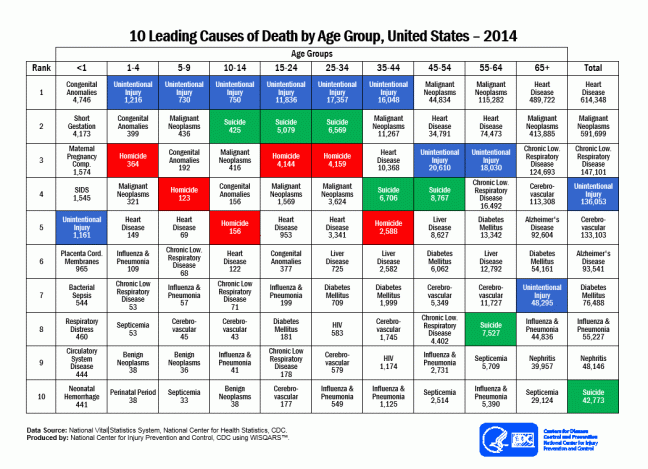
Suicide is in the top ten leading causes of death. For children as young as 10 years old up to 34 year old adults, it is the second leading cause of death. Yet, it seems that real conversations that need to be happening around this epidemic are too often neglected.
Perspectivly, there are other things that are killing us, yet there is a distinct difference in how we address those issues compared to suicide and depression. There are constant conversations about high blood pressure, smoking, diabetes, alcoholism, cancer, and heart disease. These conversations have spread to the business industry where many actively give money to foundations and organizations to address these issues. Within our public circles, we need to have more genuine conversations on these illnesses as well, where we are not judged and are able to receive the support that we need.
Yet, if we bring up depression or suicide these are met with fear and often pushed away into the cold arms of the mental health industry; the opposite of what someone who is suffering needs.
This is not to say that the mental health industry has nothing to offer. They do help provide a safe space for people, as they begin treatment through therapy and some times medication. Consequently, the readmission rate for individuals with mental health related illnesses varies 13-30% to chance. The factors that increase a likely chance of readmittance are alcohol/drug dependencies, poverty, financial trouble, depression, medication, disease, and most importantly the lack of a support system.
There is still a stigma surrounding people who seek mental health services (if they can afford to do so). Once they do, it is expected that they are now healed, but that is not always the case. There are many who, once released from inpatient treatment programs, put on the razzle-dazzle to ensure the people around them that everything is okay….and we just accept it at face value.
Experiences within these programs vary, but overall they can be traumatizing. Just to be admitted, you often go through an invasive strip search, regardless of past trauma. You’re cut off from your connection to the outside world, to the point where even the books you can read are policed. This can be shocking, especially if you were admitted involuntarily.
Inside these institutions, people see themselves at their most vulnerable, and once released, they’re expected to be whole again. But mental health is an ongoing process.
Therapy is often where people go to seek refuge from their struggles. With the right provider, it’s a great space to gain tools for coping. But what’s critical is that the broader community also learns how to support people who struggle, without adding undue burden on those who are already suffering.
As we move toward normalizing “not being okay,” when someone voices it, they’re often met with “what do you have to be depressed about?” or the conversation gets centered on how their suffering is affecting someone else: “well, I don’t want you to be depressed.” Newsflash: we don’t want to be depressed either.
While well-intentioned, these responses add undue stress and burden during an already difficult time. Our society continuously pushes us to remain functional regardless of our struggles, a pressure deeply rooted in ableism. What people actually need is for the circumstances that led to their depression to be addressed, and space to exist without the pressure of constantly performing functionality.
The best thing to do in these situations is to be proactive. It varies person to person, but if someone struggles to eat, get them food. Offer to clean their space. Take on watching their kids if they have any. These steps depend on how well you know the person, but they’re a starting point: space to process without being burdened by the day-to-day.
I’ll end with a moment of transparency. I actually started writing this piece years ago, inspired by my own experiences and my bouts with mild depression and what I’ve called “spicy depression” (suicidal depression). Each year I come back and write more, trying to better articulate how I’ve come to understand my circumstances within the broader scheme of society.
As a Black woman, this is a tender subject for me; the issues compound. But my intent is to start an ongoing conversation about mental health, suicide, and depression, and to work toward better systems of community care that reach those of us who have danced on the edge. This is also my own method of self-expression, using my experience alongside data, hoping to inspire others who haven’t lived it to understand it.
I want to be clear: I am not a mental health practitioner professionally. But I’ve always been a mental wellness advocate, taking time to learn, both personally and professionally, trauma-informed approaches. I encourage you to seek out experts who’ve done the necessary work to provide proper care. Below are some resources:
- Therapy for Black Girls: an online space connecting Black women and girls with culturally competent therapists and mental health resources.
- Psychology Today: a therapist directory and mental health resource where you can search for providers by location, specialty, and insurance.
- 988 Suicide & Crisis Lifeline: a free, confidential, 24/7 hotline you can call or text for support during a mental health crisis.
- The Trevor Project: a crisis intervention and suicide prevention organization focused on LGBTQ+ young people.
- NAMI (National Alliance on Mental Illness): a grassroots organization offering education, support groups, and advocacy for people affected by mental illness and their families.

